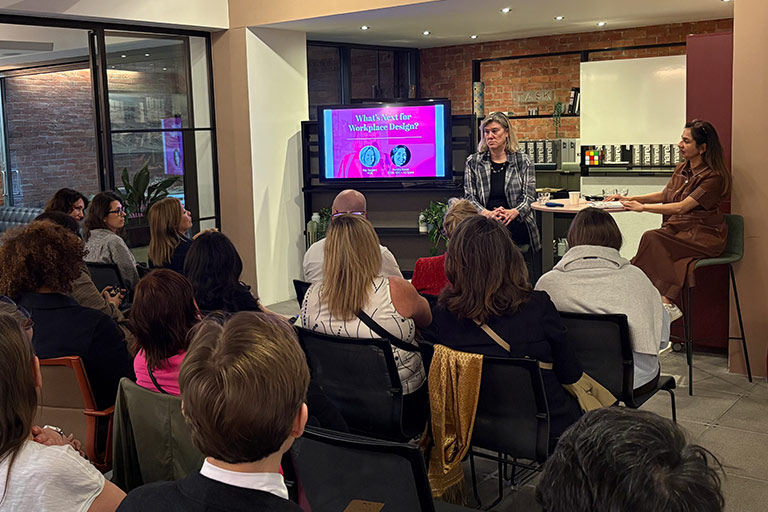
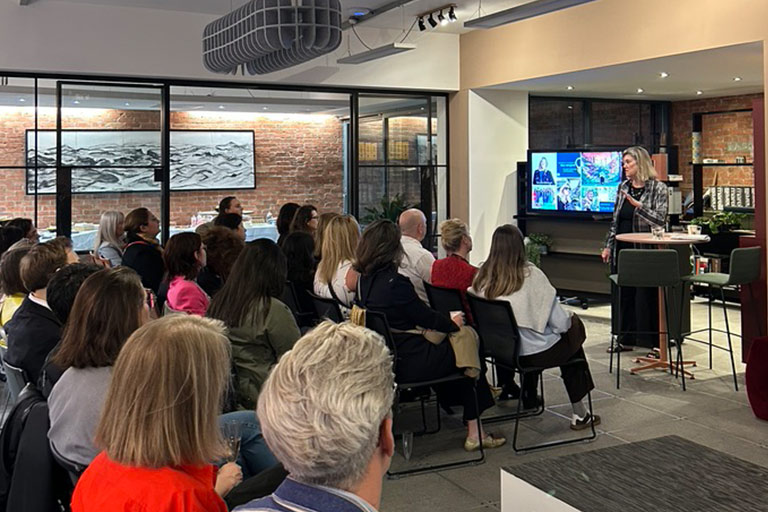
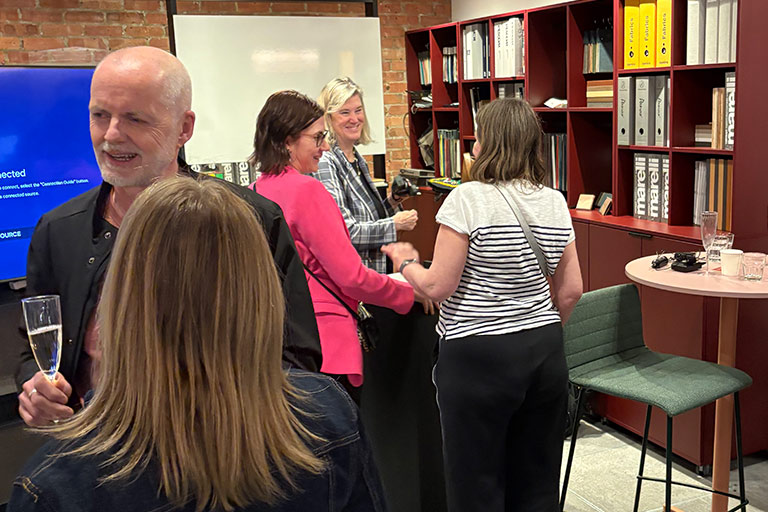
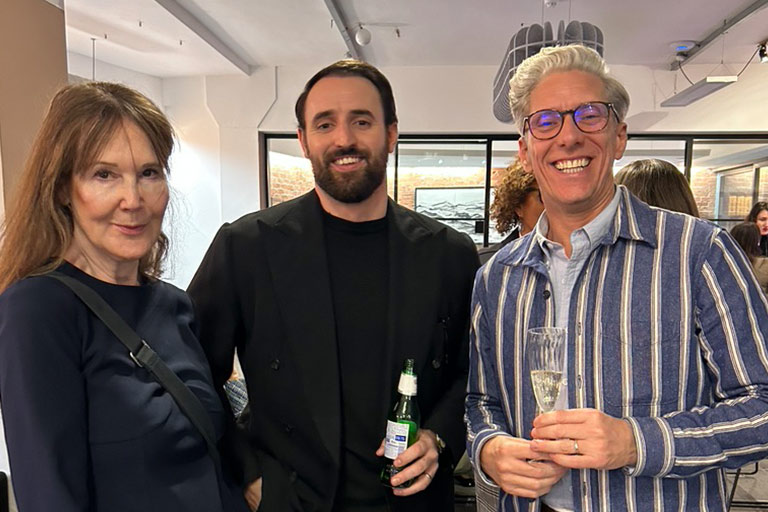
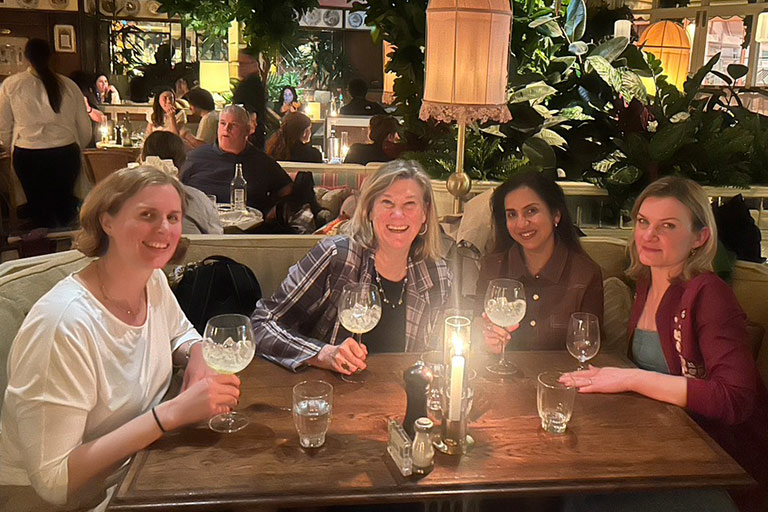
Future casting, as Kay described it, is the practice of noticing the signals already around us, connecting them, and asking a more uncomfortable question: not where we think we are going, but where our decisions are actually taking us.
The analogy was simple: you would never get in a car without knowing your destination. Yet as an industry we make decisions every day – about buildings, campuses, leases, materials, that will shape the next 30 to 40 years, without any clear sense of where we are trying to end up.
As she cleverly said: “We are no longer designing environments. We are designing the future.”
Then came a simple provocation:
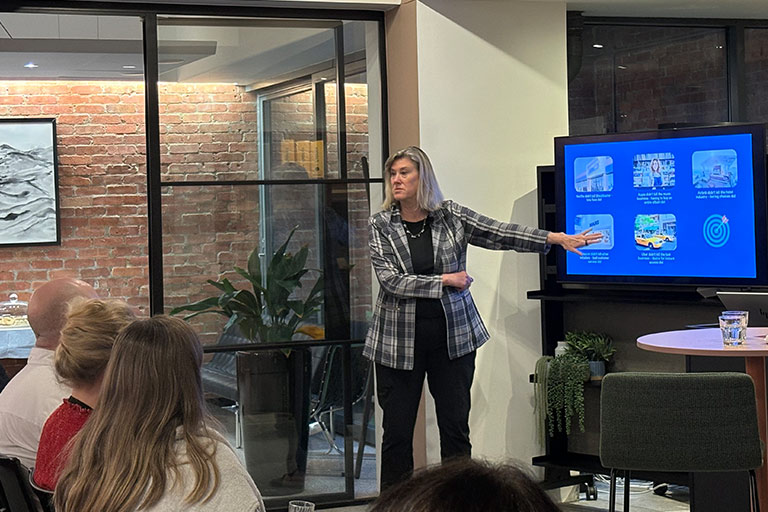
• Netflix didn’t kill Blockbuster. Late fees did.
• Amazon didn’t kill retail. Bad customer service did.
• Uber didn’t kill the taxi industry. The inability to get one did.
Disruption is rarely external. It is usually internal, a slow erosion caused by the refusal to evolve. And yet much of what we are designing still reflects a workforce that no longer exists. Her challenge to the room was simple – the real threat to this profession is not the competition. It is irrelevance.
On AI, she was clear. These tools will always produce something; quickly, fluently, convincingly. But they do not understand how a human actually experiences a space.
That gap is where design either loses its meaning or proves its value. Thank you Kay for challenging us to look further, think harder and take the future seriously. The goal is not to predict the future. It is to stop sleepwalking into it.