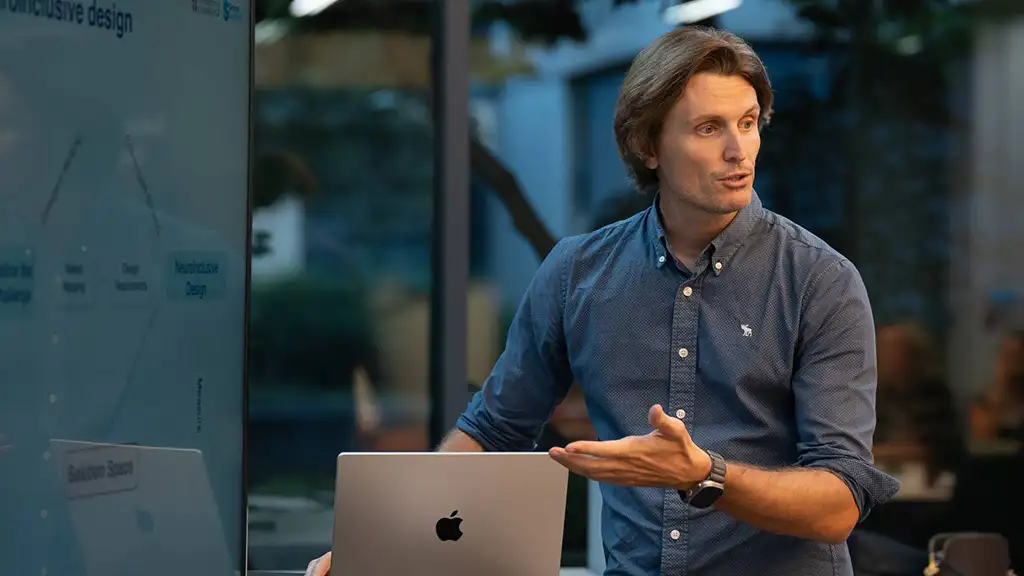
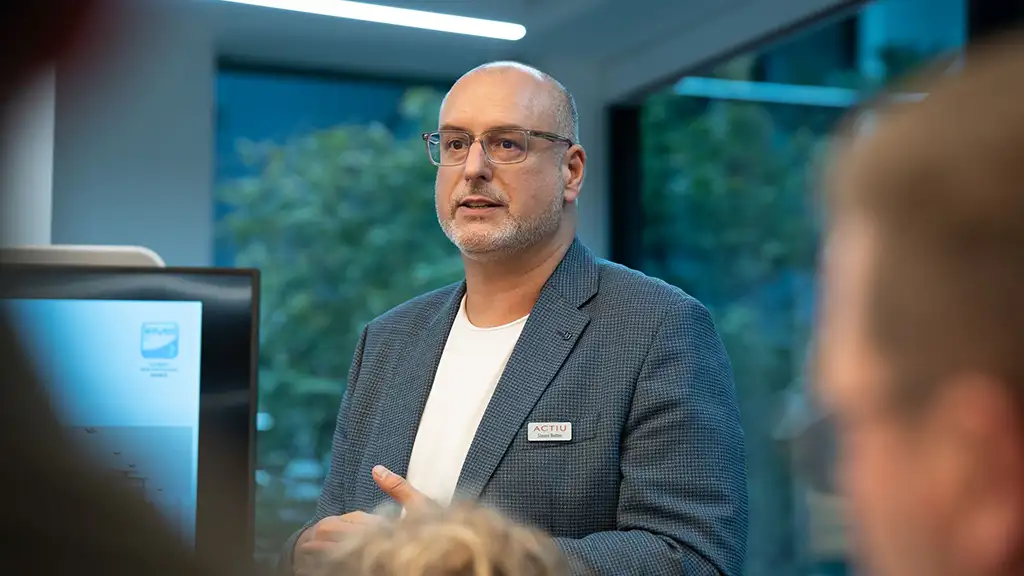
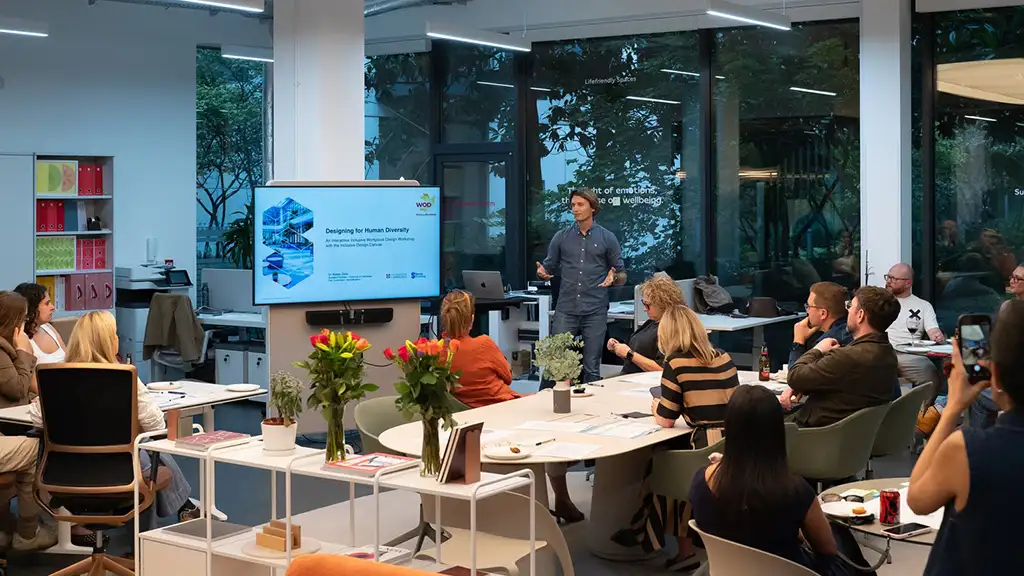
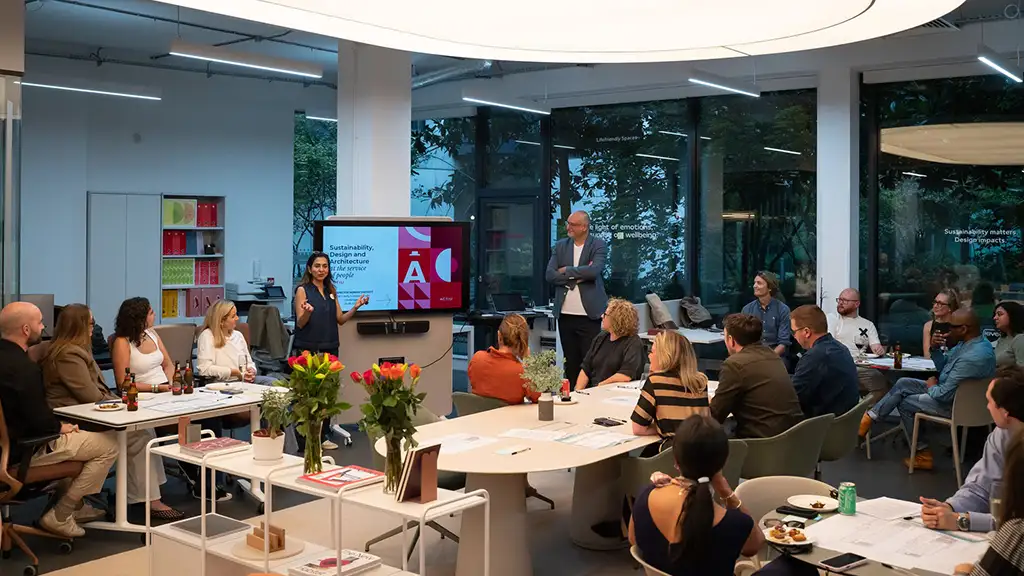
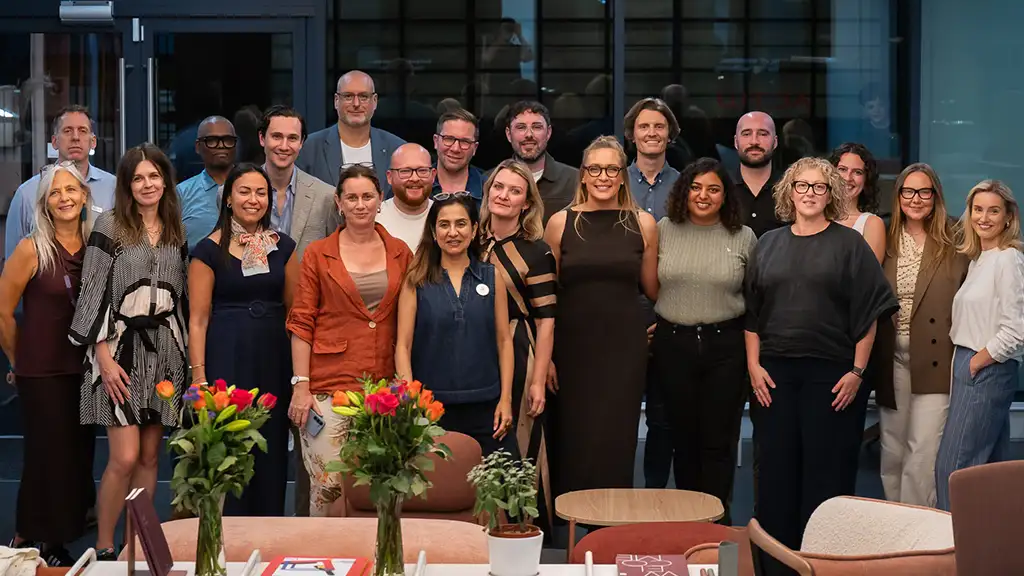
The thought at the heart of the workshop was simple: every person experiences a space differently, through their body, their senses and their mind. So how do we design for such a diverse range of people without ending up with a requirements list that no one can actually use?
The research offered some practical starting points:
• Start with people, not the specification. Consider physical, sensory and cognitive capabilities within the space you design, and describe your personas and their journeys.
• Find the real challenge. Researchers love the problem space. Designers love the solution space. The real challenge sits between the two.
• Put needs before requirements. Understand what people need before specifying solutions.
• Keep measuring. Use POEs, benchmarks and feedback to learn, adapt and improve.
Teams worked through the Inclusive Design Canvas, a tool developed by the Cambridge team that brings personas, journeys and capabilities together to help reframe needs and design requirements.
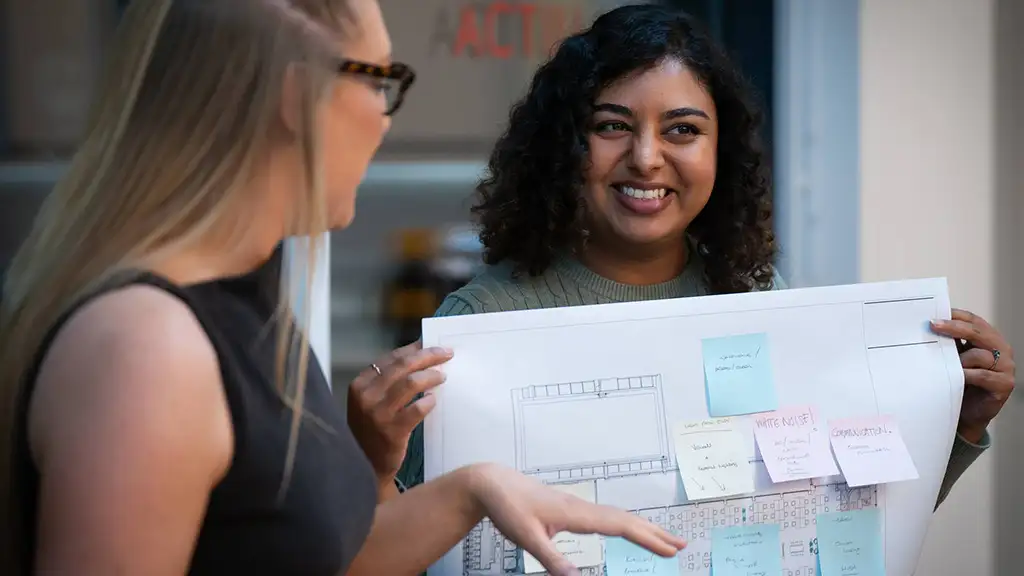
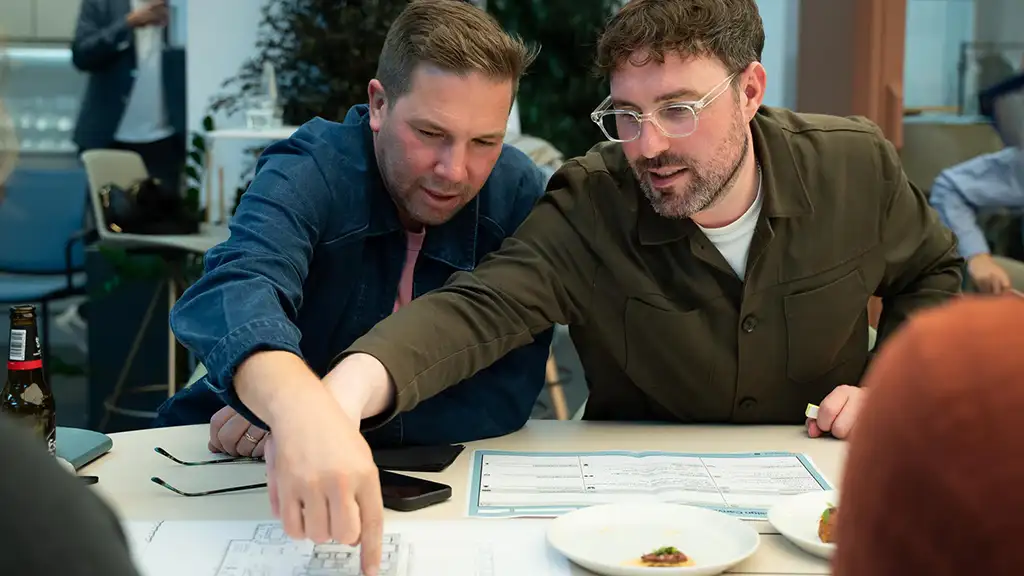
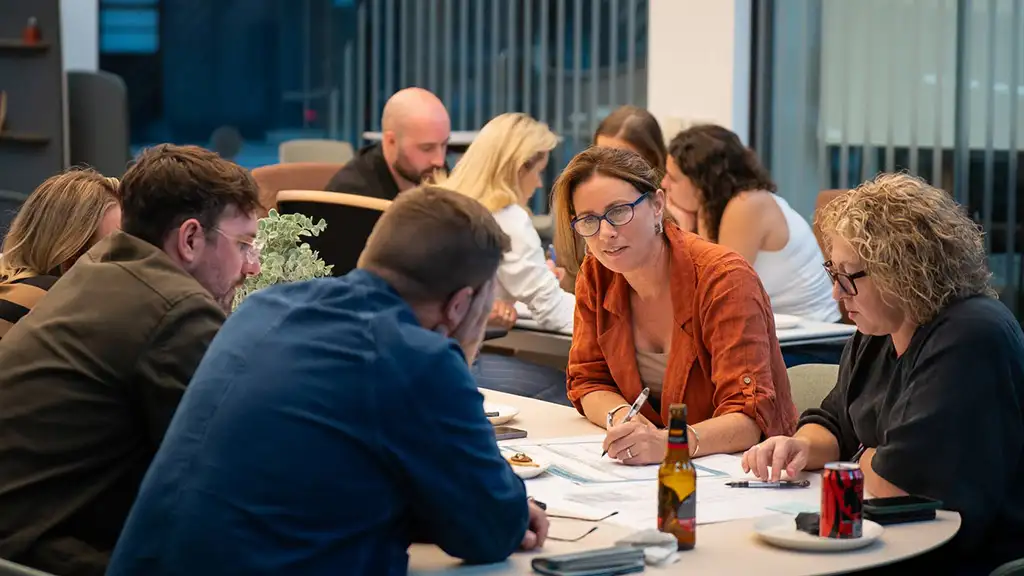
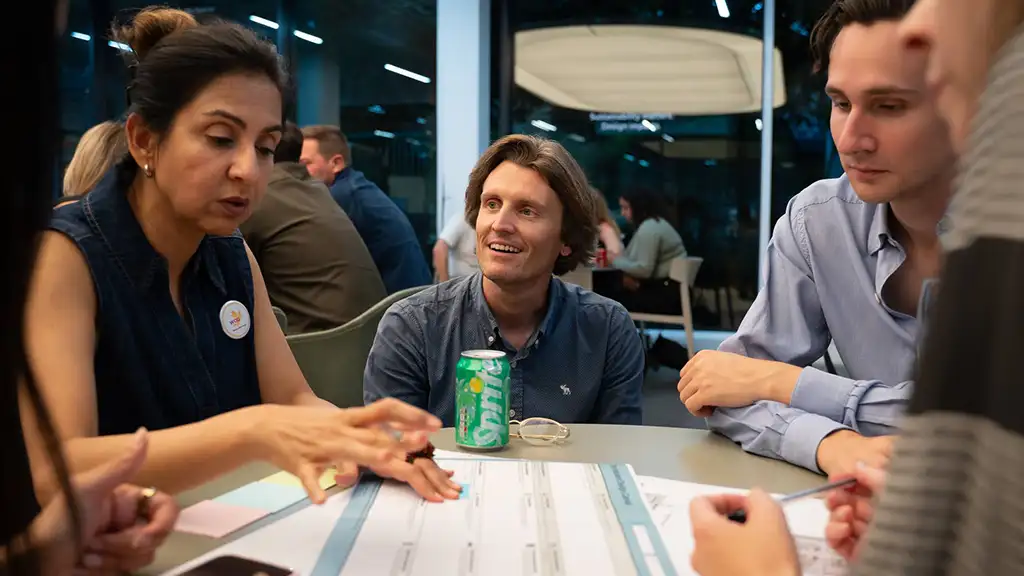
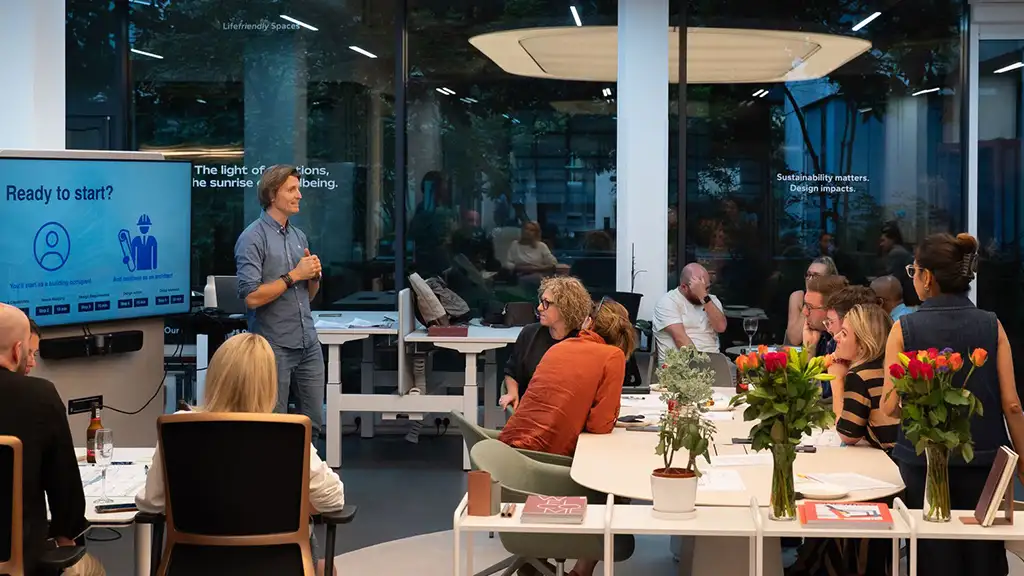
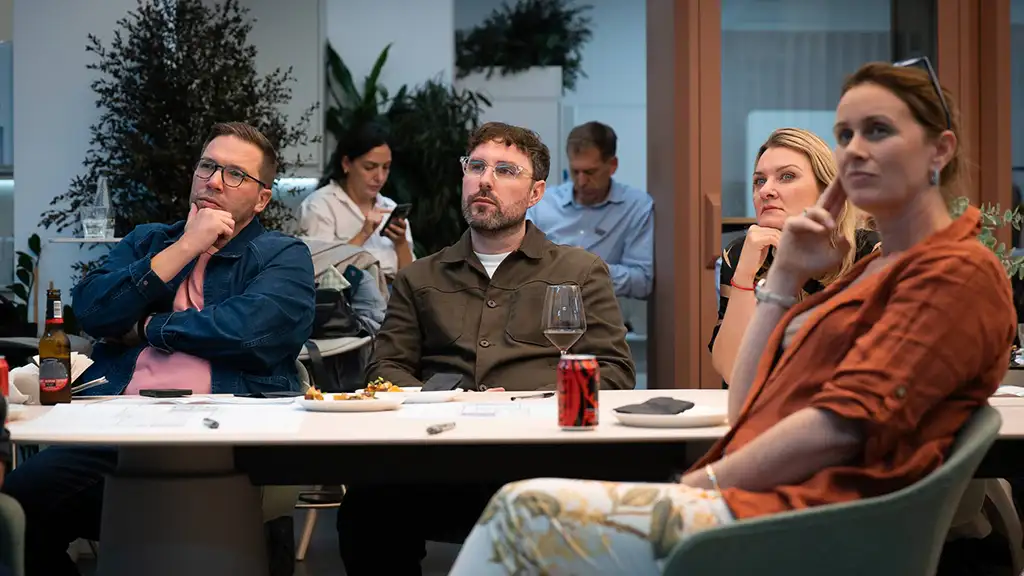
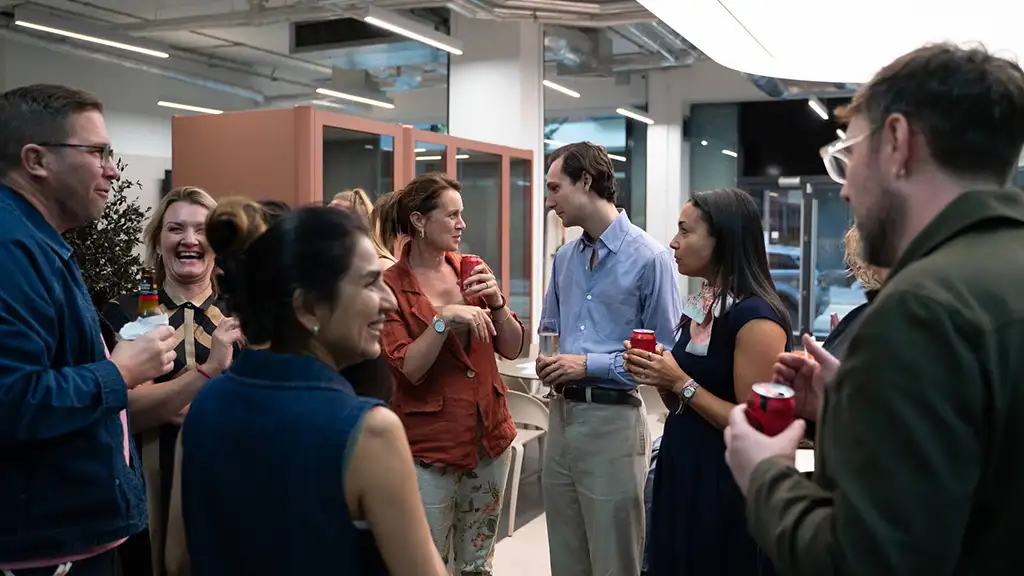
Each team was given a printed space plan to improve and redesign. With brainstorming, post-its everywhere and lively conversations at every table, it was a truly collaborative session. At the end, each team presented their solutions, and every one was uniquely human and fascinating to see.
As we were reminded at the start, the aim wasn’t to produce a finished blueprint ready for the contractor tomorrow. It was to explore the approach, exchange ideas and learn from one another.
We’re looking forward to taking these ideas forward and continuing the conversation about how more inclusive spaces can look, function and feel.